Grid(a) Temporali
Grid(a) Temporali is an exhibition built from two incomplete datasets from the Great Lakes region of North America: shipwreck records and decades of wolf and moose population data from Isle Royale. From these, I built hybrid datasets that layer archival material with speculative, AI-generated images and text. The goal is not to recover what's missing or to speak for the communities left out of the record, but to make visible how and why those absences exist in the first place.
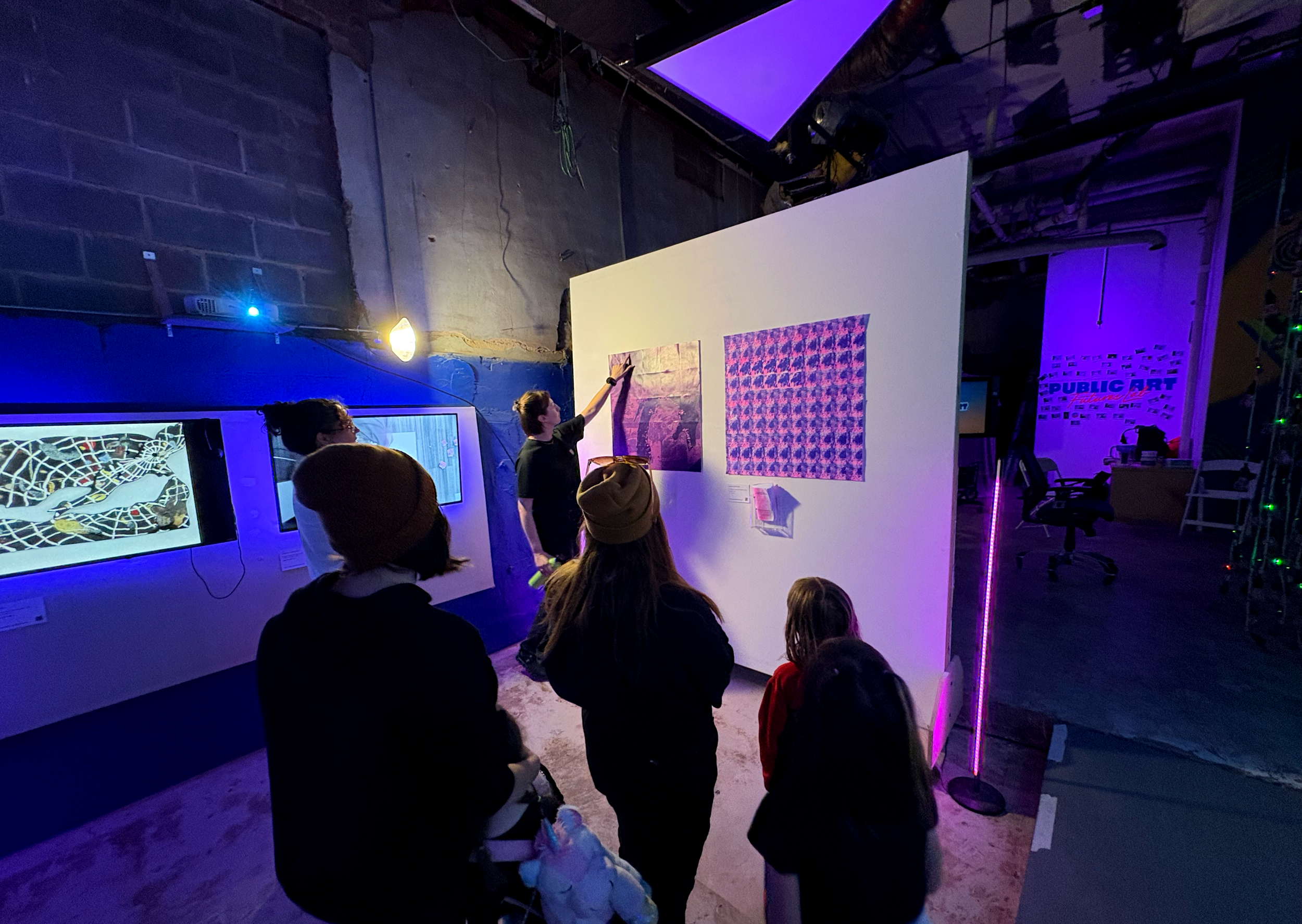
Large-format prints render the hybrid data as maps that can be read in many directions. Archival photographs, AI-generated imagery, and ASCII-rendered data layers are woven together so closely that it's hard to tell which is which, and time breaks apart into scattered moments rather than a continuous history. Even the errors stay in view: in one print, a diagonal line of AI-generated shipwrecks cuts across dry land, exposing the machine logic beneath the map. The result is not a clearer picture of the past but a way of experiencing its uncertainty, with doubt built into the surface of the work. Zines and an artist book reassemble the same material at a more intimate scale. Folded pages, layered spreads, and partial views let readers move through stories out of order, pausing, flipping back, and rereading at their own pace. Across both forms, the gaps in the record are not filled in but carried forward, left for each viewer to sit with.
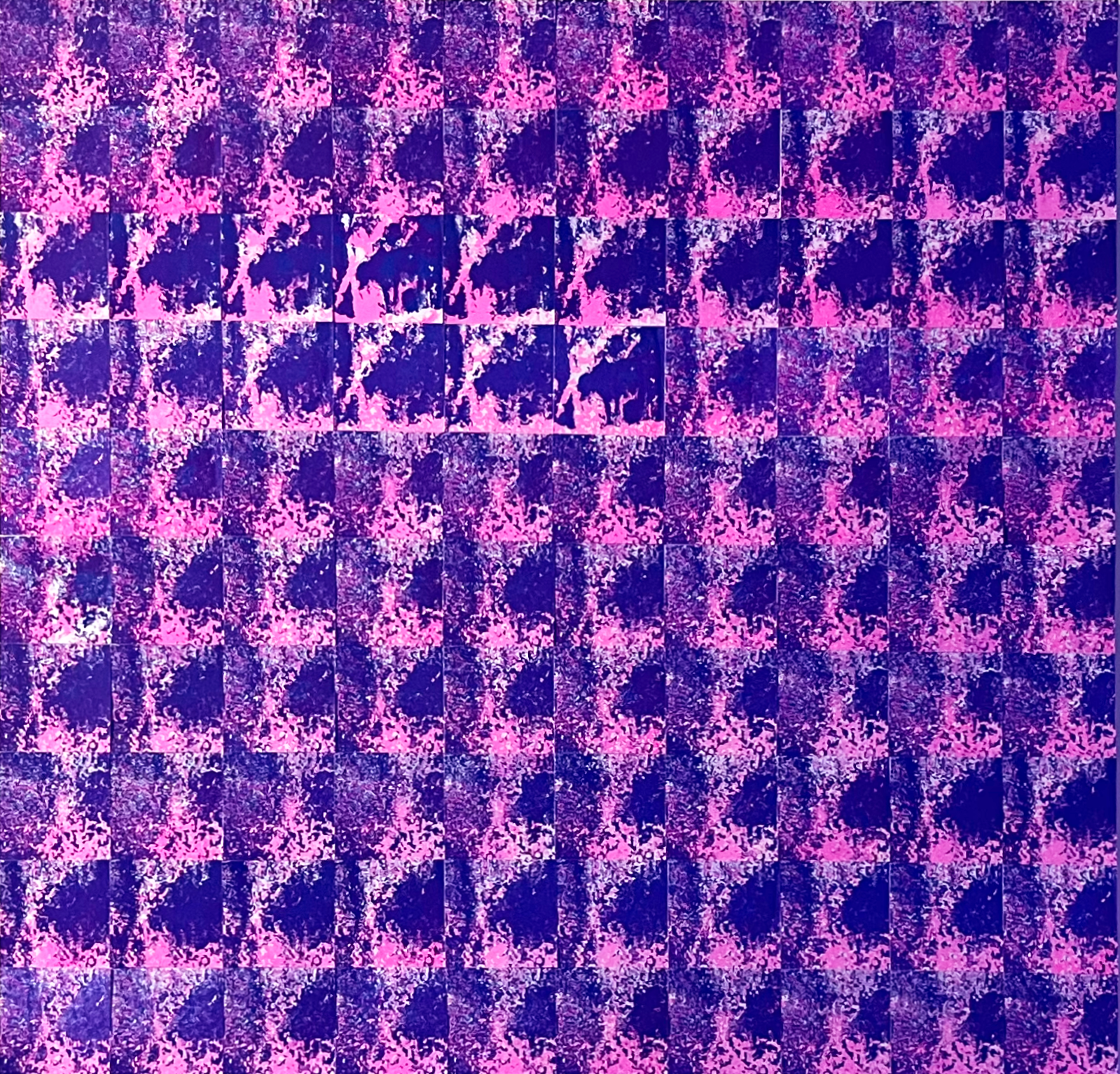
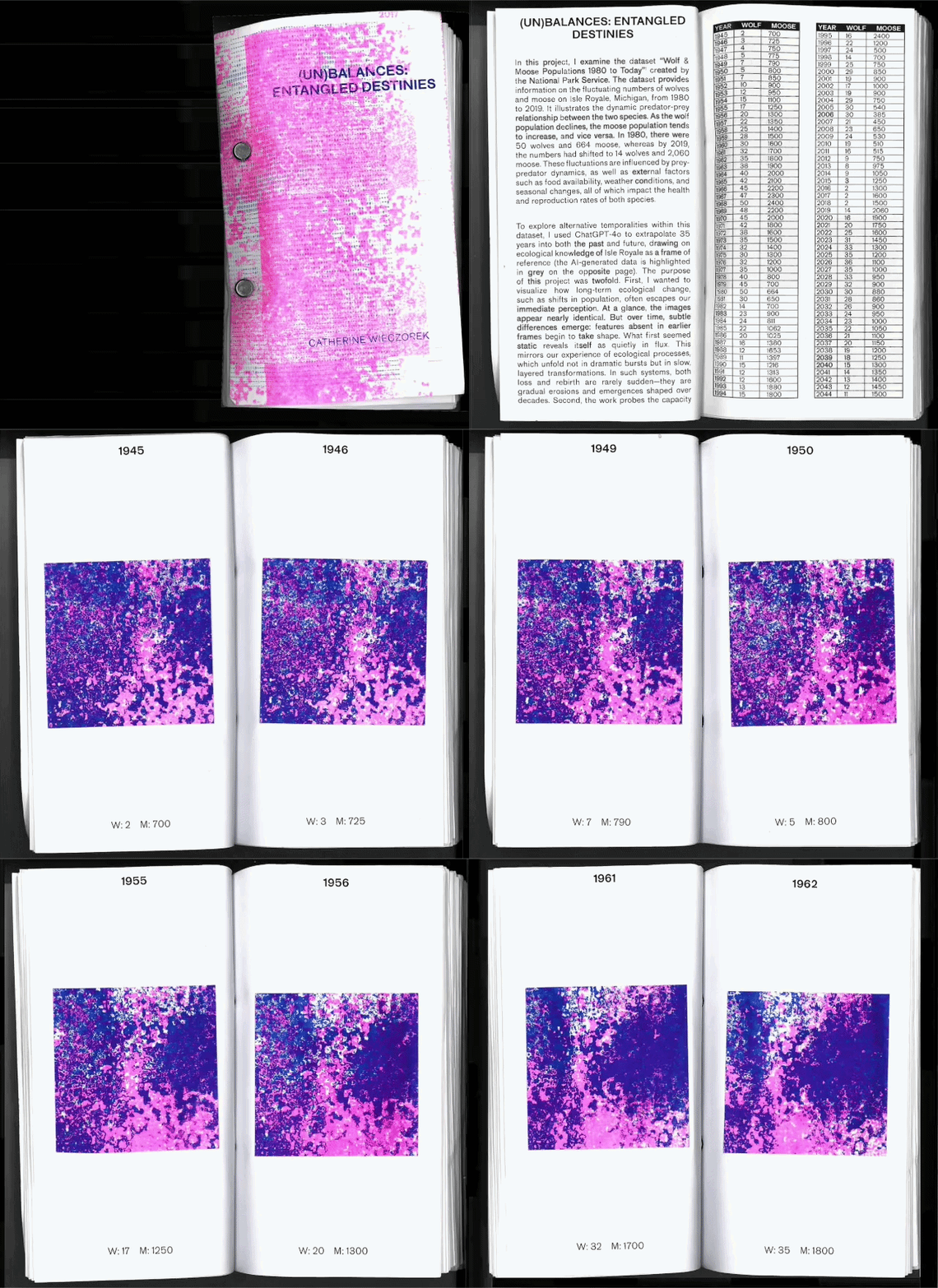
(Un)balances: Entangled Destinies
30” x 30” Risograph print and accompanying artist book.
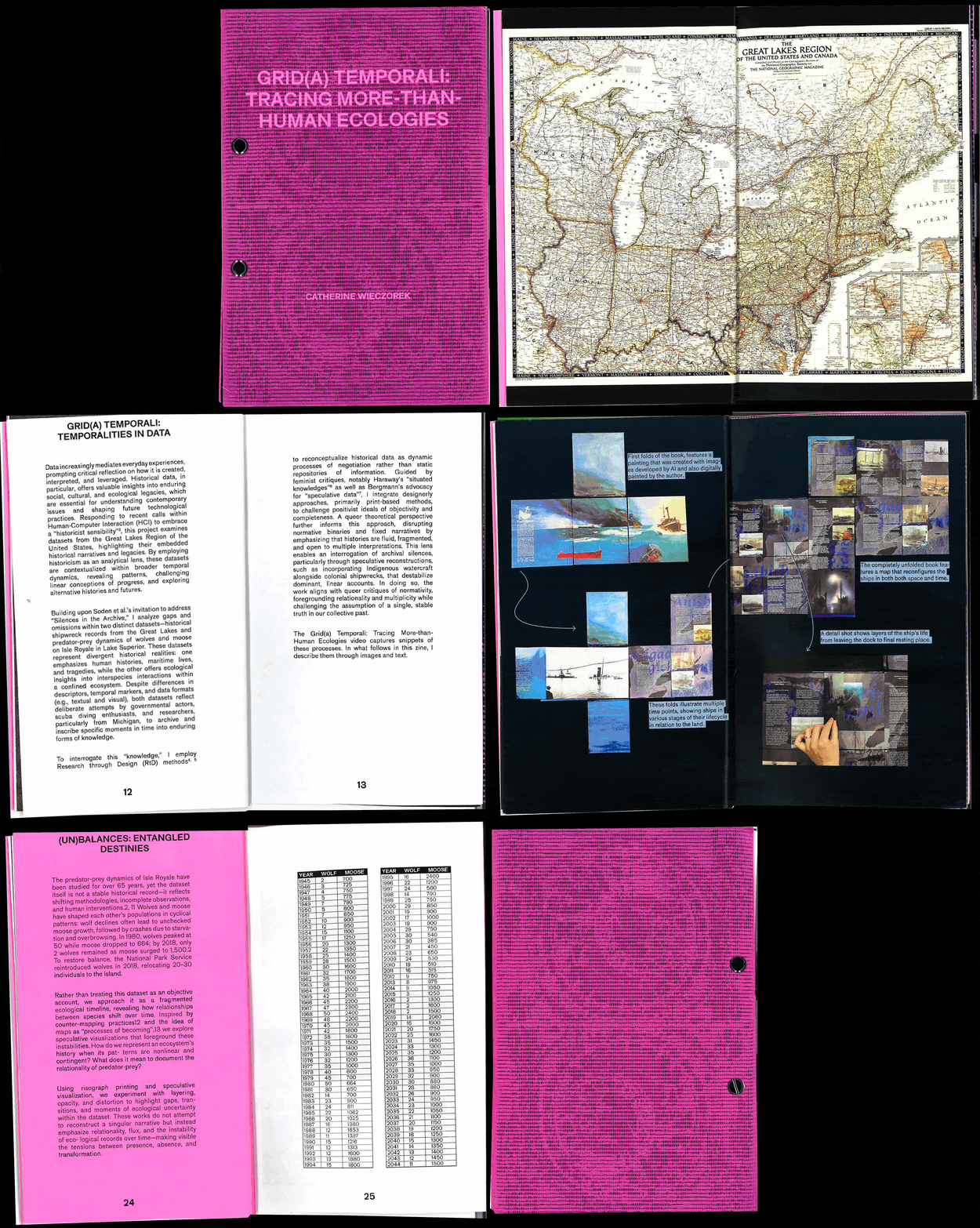
Grid(a) Temporali Exhibition Zine
Laser jet printed zine
2025
Concept, Design & Research: Catherine Wieczorek
Risograph Printing: Sarah Lawrence
Exhibited at: The Public Art Futures Lab, curated by Allie Teixeira Riggs
Related Publications
Wieczorek, C., Janicki, S., Rothschild, A., DiSalvo, C., & Bardzell, S. (2026, June). Speculating the Archive: Research through Design with Incomplete Histories. In Proceedings of the 2026 Designing Interactive Systems Conference (pp. 2140-2155). doi.org/10.1145/3800645.3812795
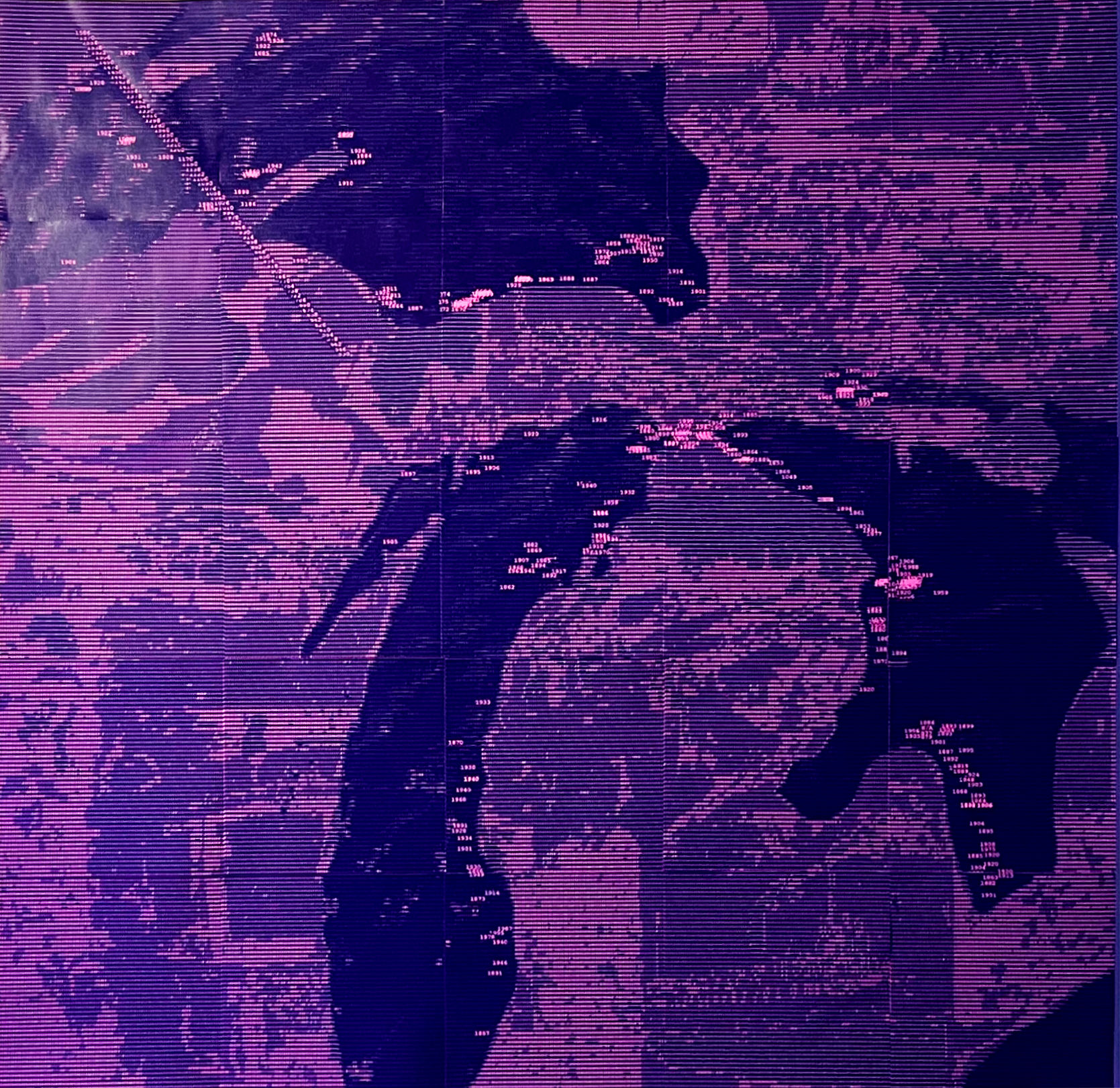
(Seam)less Histories
30” x 30” Print
Process video of dataset manipulation and prototyping