Workshops, Storytelling, and Diagramming with American Library Workers
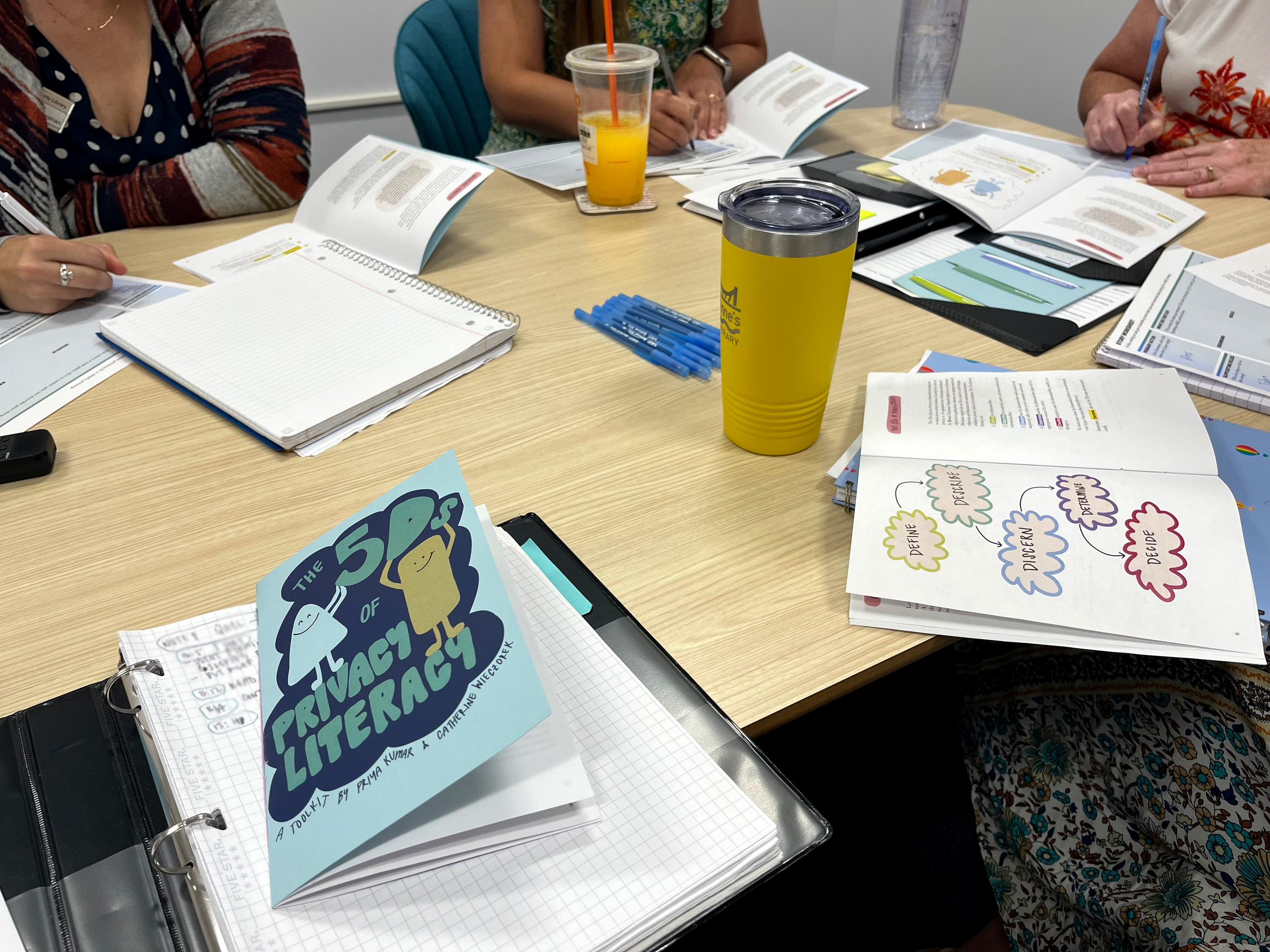
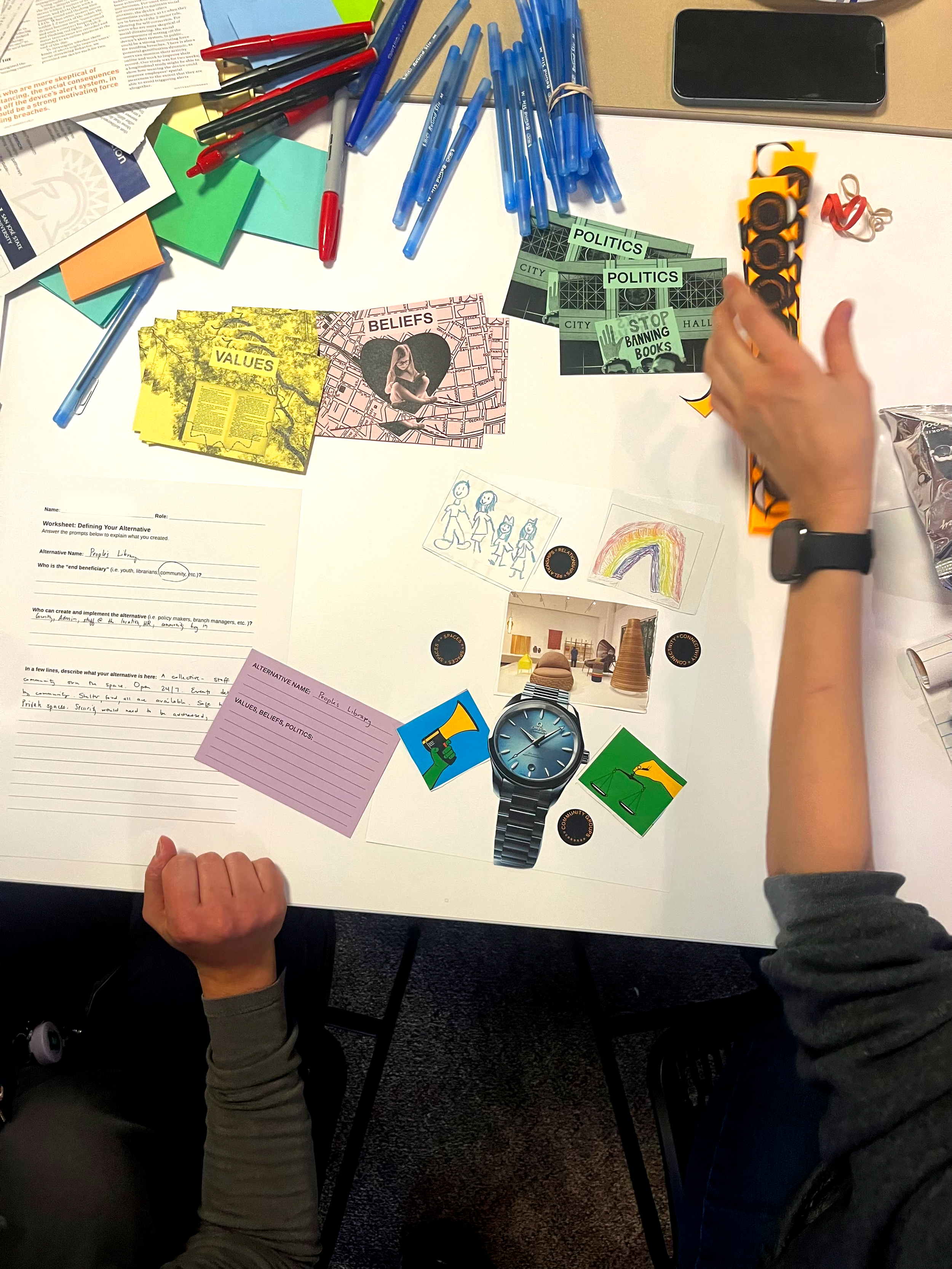
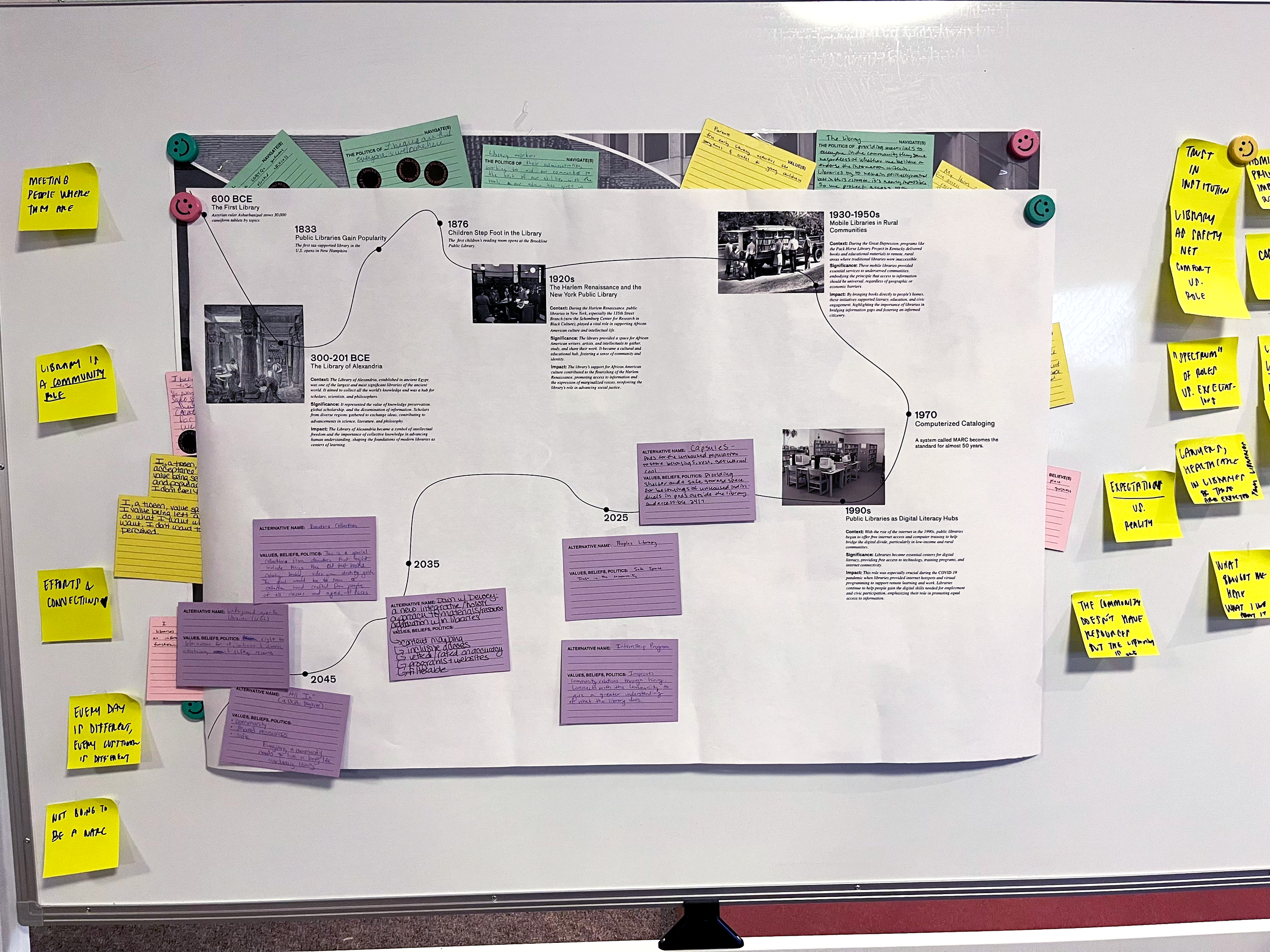
The project began in 2023 with Kumar's interest in developing a privacy-literacy curriculum for youth patrons. In our first workshop, however, library workers used our materials to talk about privacy within their day-to-day working conditions: the systems, policies, staff, and resources that shape what their branch can actually do. We followed their lead. Across twelve participatory design workshops with 100 library workers, four at professional library conferences and eight in library branches, each session became a chance to prototype tools through which workers could examine their own institutions.
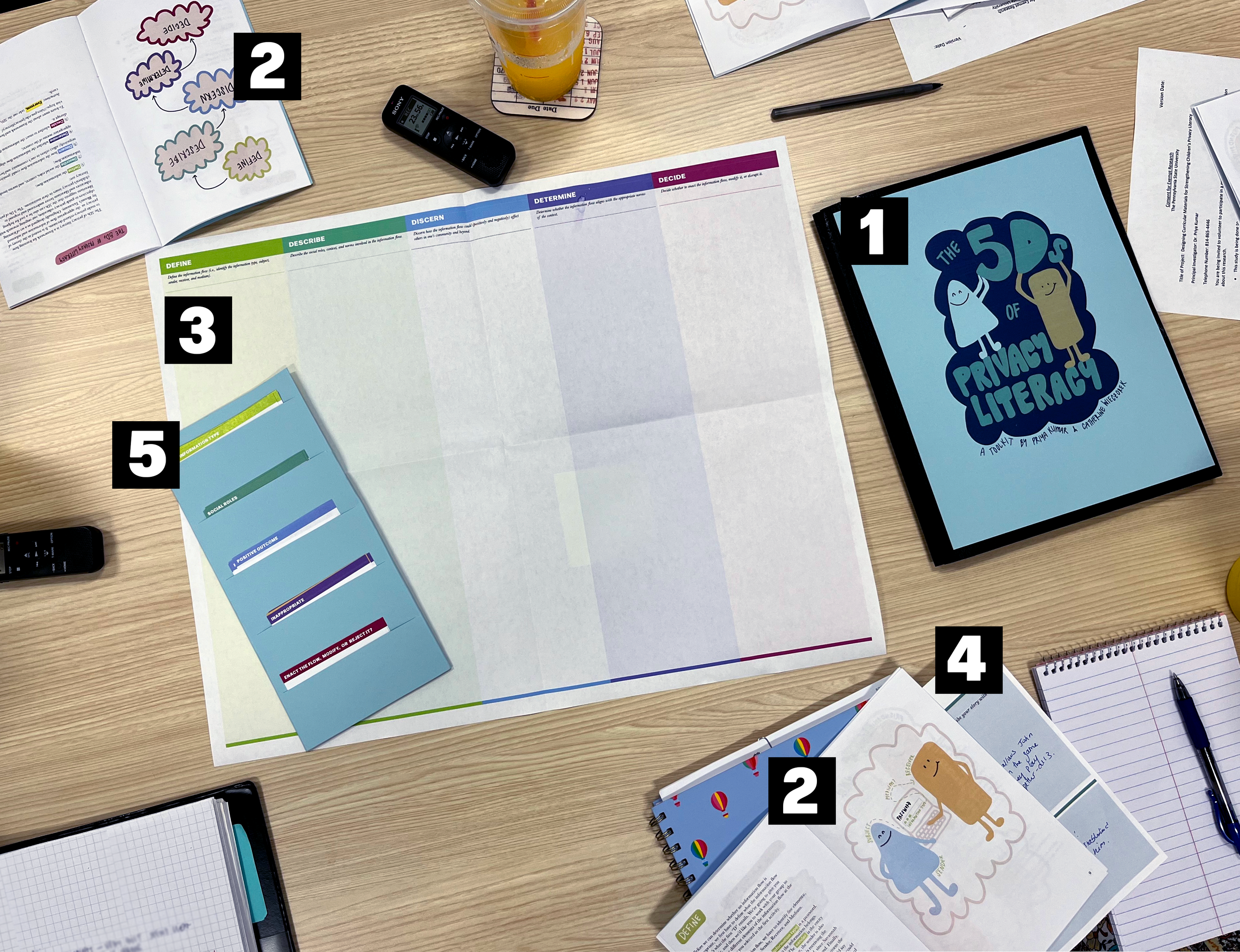
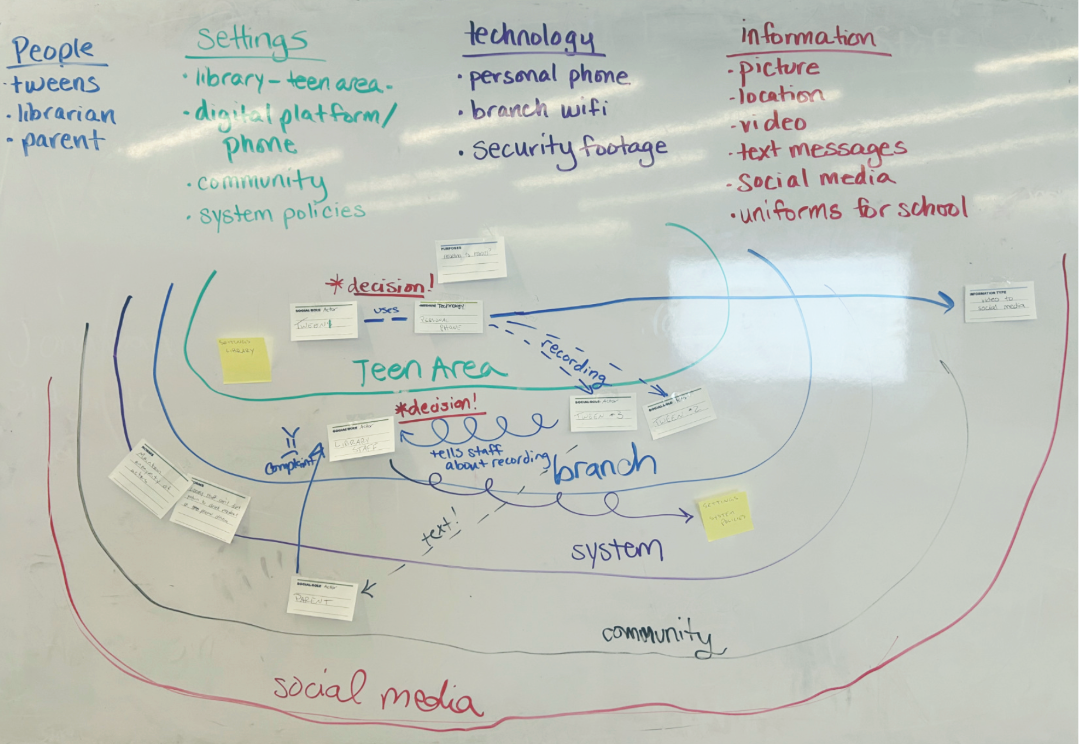
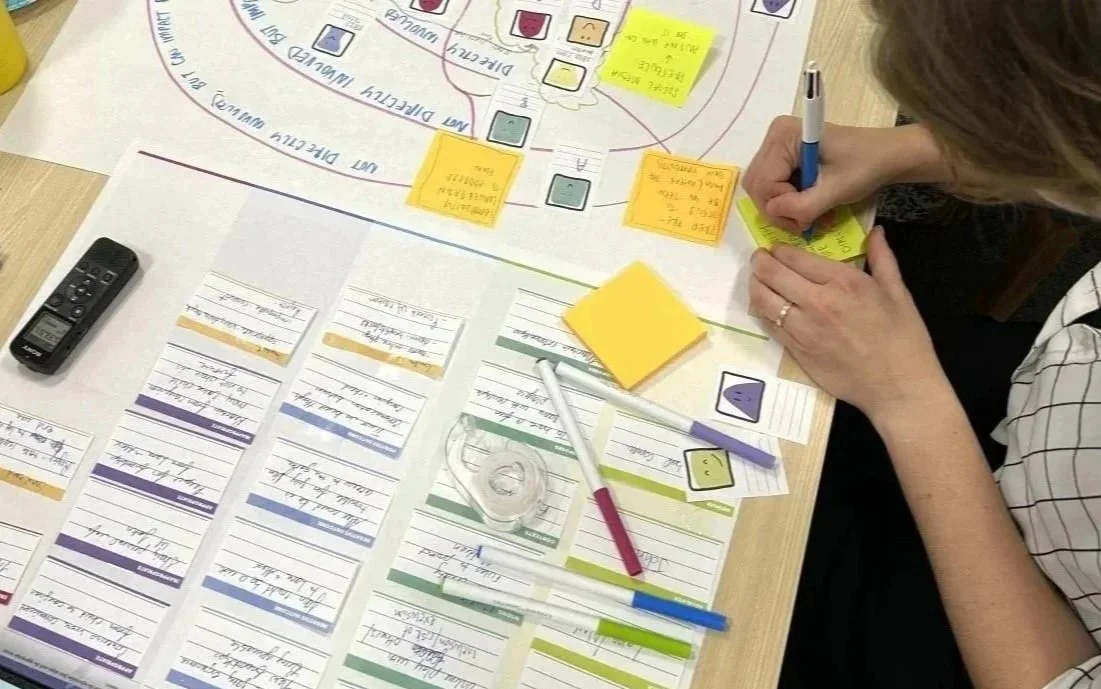
As design lead, I turned what surfaced in each workshop into the next round of materials, sketching, prototyping, and diagramming between sessions. The result is a toolkit that guides workers to write a story from their own practice, then diagram, as a group, the technologies, spaces, people, and policies around it. A seemingly simple incident, such as one teen recording another without consent, turns out to unfold across the branch at different times: a librarian talks with the teens at the desk, a parent returns later to confront a different worker, and a manager reads the incident report and sets policy. Some incidents like this can be resolved with existing policy. Others, such as overdoses or police surveillance of patrons, stay unresolved because the workers responsible have neither the authority nor clear guidance to act. Working through the toolkit together, workers could name this as a shared institutional condition rather than something to deal with on their own.
We are now preparing the toolkit for national testing, so that library workers beyond our workshops can make these conditions visible in their own branches.
2022–Ongoing
Research and Design: Catherine Wieczorek, Hongyi Dong, Priya Kumar (PI)