Reading Time Otherwise: A Project Log
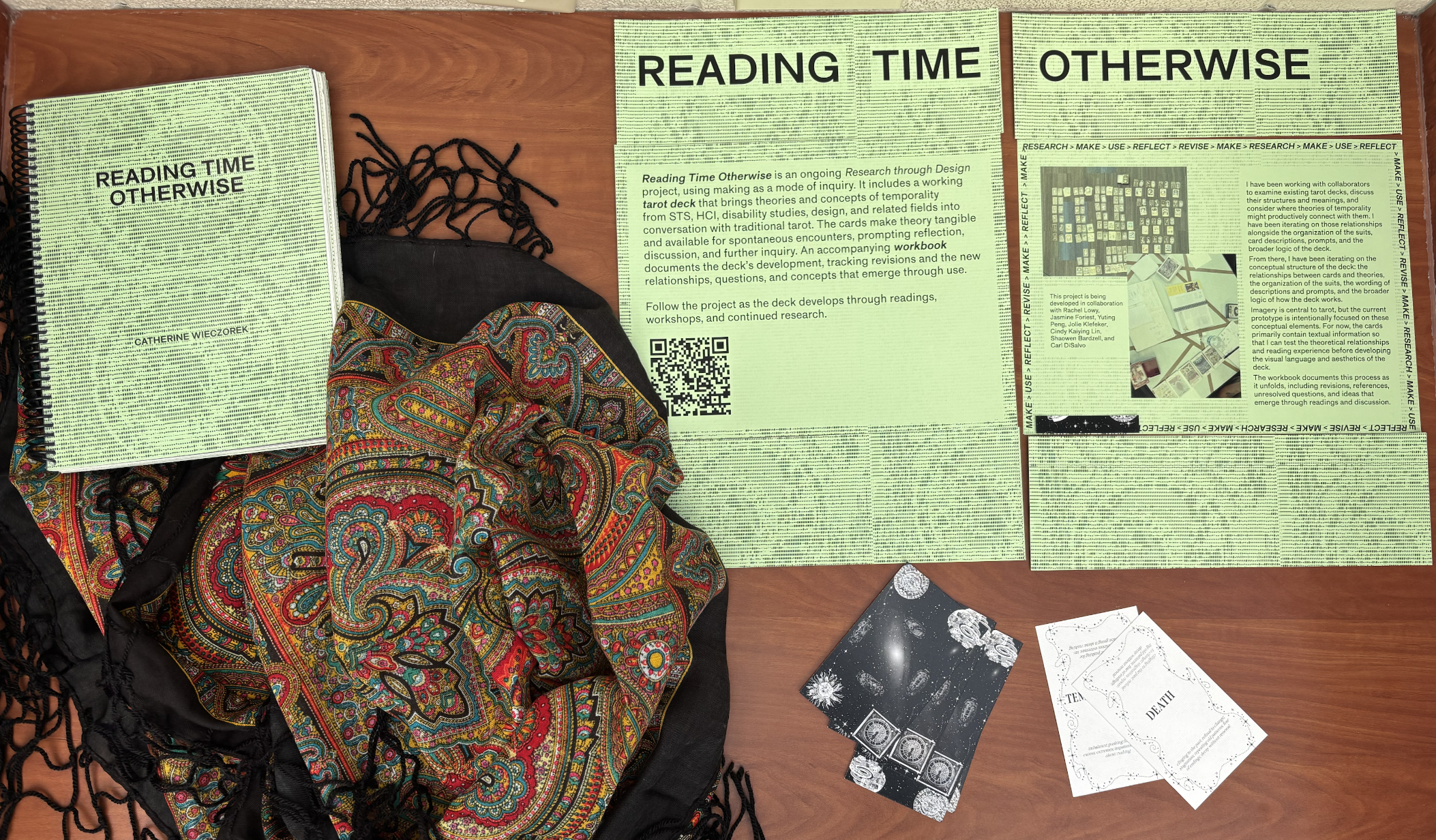
Reading Time Otherwise is an ongoing Research through Design (RtD) project exploring how theories and concepts of temporality can be encountered through a working tarot deck and companion workbook. RtD uses making as a mode of inquiry: designing, using, and revising an artifact becomes part of how knowledge is developed. The deck brings ideas from STS, HCI, disability studies, design, and related fields into conversation with traditional tarot, creating a material and spontaneous way to engage theory and prompt further reflection and inquiry.
This page documents that process through notes, prototype changes, workshop reflections, and questions that emerge as the deck is used and revised.
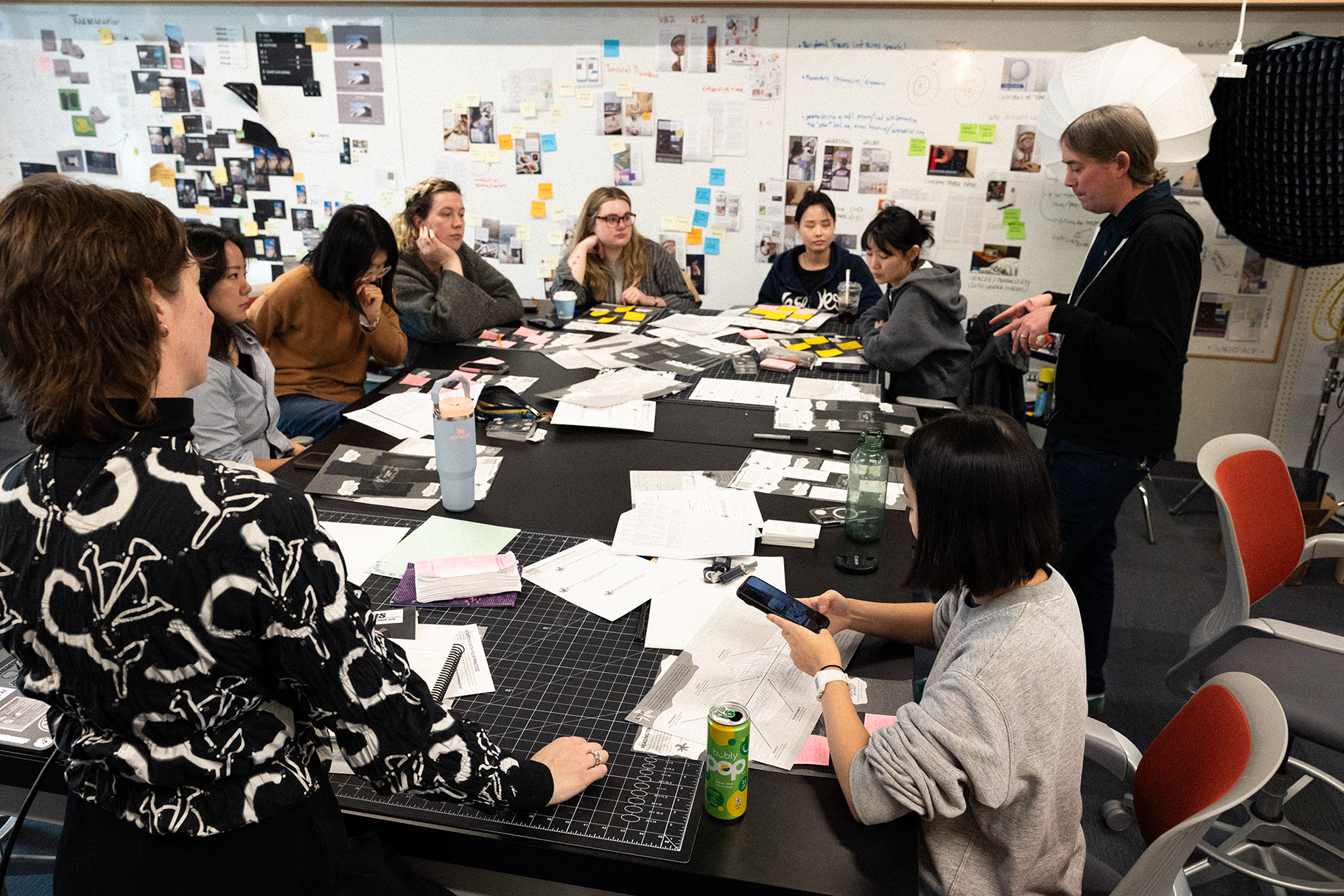
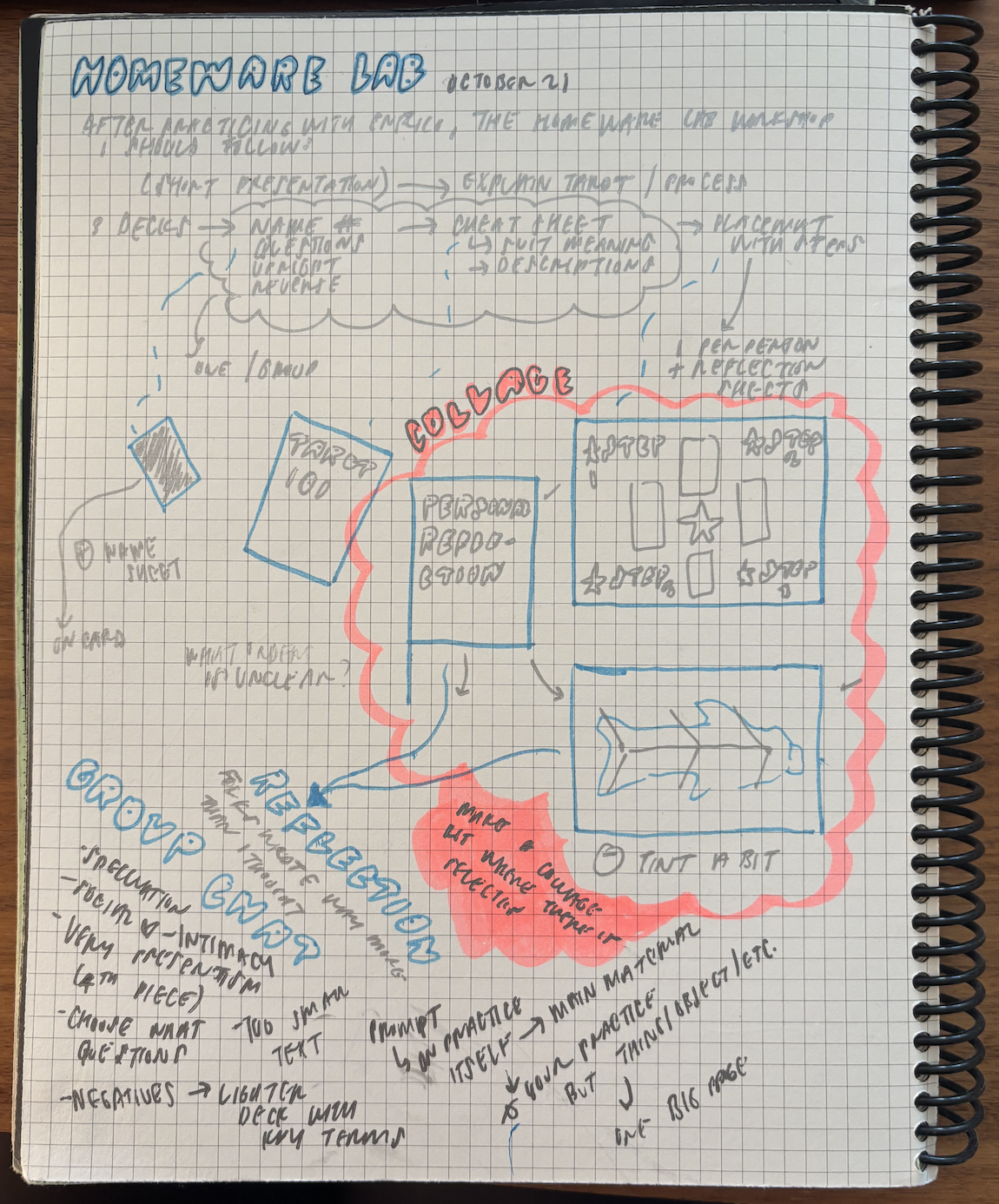
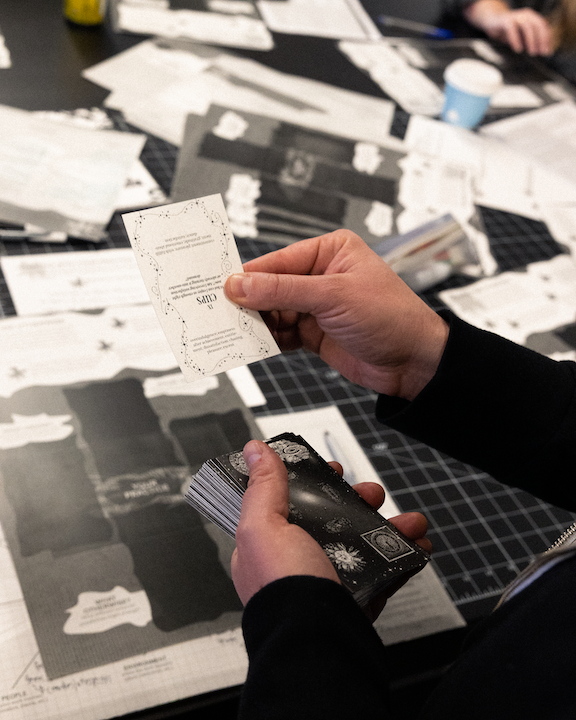
Photo credit: Sam Barnett
October 21, 2026 –– A Visit to the Homeware Lab
I brought Reading Time Otherwise to the Homeware Lab at Simon Fraser University for a workshop exploring how tarot might help researchers and designers reflect on their creative and research practices. Unlike the individual readings I had been doing at 4S, this workshop was an experiment in having participants read and interpret the cards themselves.
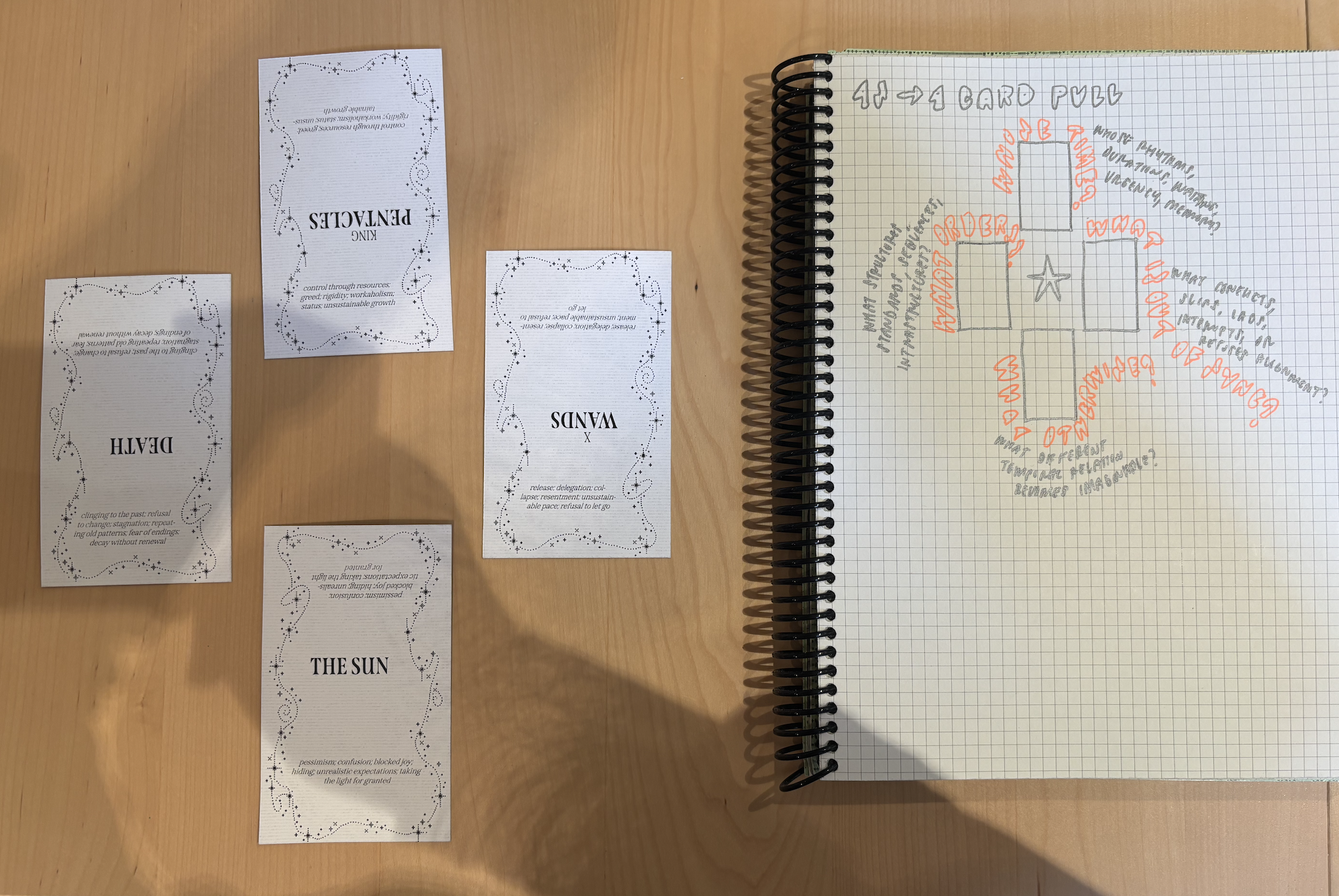
To support this, I adapted a few reflection activities from my earlier Make Your Own Table project and designed a new four-card tarot reading placemat. Participants began by writing about a specific project or practice, then mapped the people, materials, tools, processes, and conditions shaping their work. They then moved into small groups, where each person used the tarot deck and placemat to conduct their own reading, drawing on their earlier reflections.
A few things stood out to me. First, 78 cards is a lot! Despite minimal instruction, participants embraced the ambiguity of the activity and were willing to experiment with the cards and their interpretations. At the same time, without a full companion workbook explaining the meanings, theoretical connections, and possible interpretations, the deck wasn't necessarily easy to navigate independently. This reinforced how important the workbook will be, particularly for self-directed readings. I was also surprised by how much participants wrote during the initial reflection activities. I had imagined these as brief starting points, but people spent considerably more time with them than expected.
When it came time for participants to do their own tarot pulls, I was struck by how well these individual readings worked as a collective activity. The cards created opportunities for people to share experiences and learn about one another's work in unexpected ways. There were some practical lessons, too. The placemats need lighter backgrounds so folks can write directly onto them. Additionally, the prompts could be more intentionally centered on the researcher's object of study rather than their individual experiences. In short, less traditional personal introspection and more intentionally focused on the craft/practice/work.
Overall, this was a useful experiment in combining the deck with other workshop materials, and in exploring how the cards might support both individual reflection and collective interpretation without me conducting the readings.
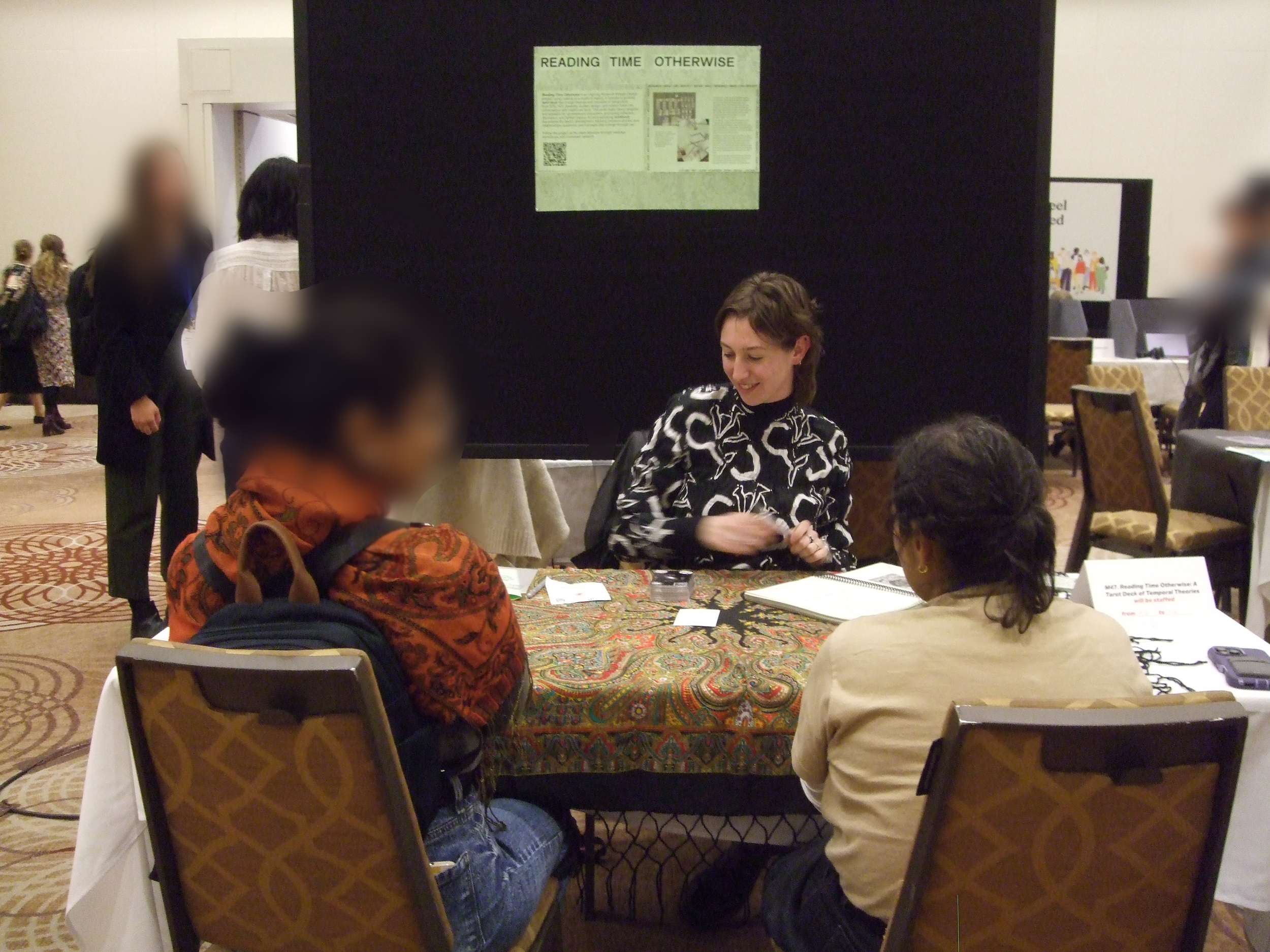
Photo credit: Eunju Pak
I submitted my 4S abstract with my collaborators: Rachel Lowy, Jasmine Foriest, Yuting Peng, Jolie Klefeker, Cindy Kaiying Lin, Shaowen Bardzell, and Carl DiSalvo.
October 9, 2026 –– Reading Time Otherwise at 4S: Making, Doing, and Revising
I recently brought Reading Time Otherwise to the 4S Making and Doing program, where I offered tarot readings using the working deck. It was a great opportunity to share the project, meet STS scholars working across different areas, and learn about their research through conversations sparked by the cards.
One of the most exciting parts of the experience was encountering theories and concepts I hadn't previously considered for the deck—or perhaps particular pairings between card and theory. Each reading opened up different conversations and connections, giving me new ideas for cards and ways to rethink existing ones.
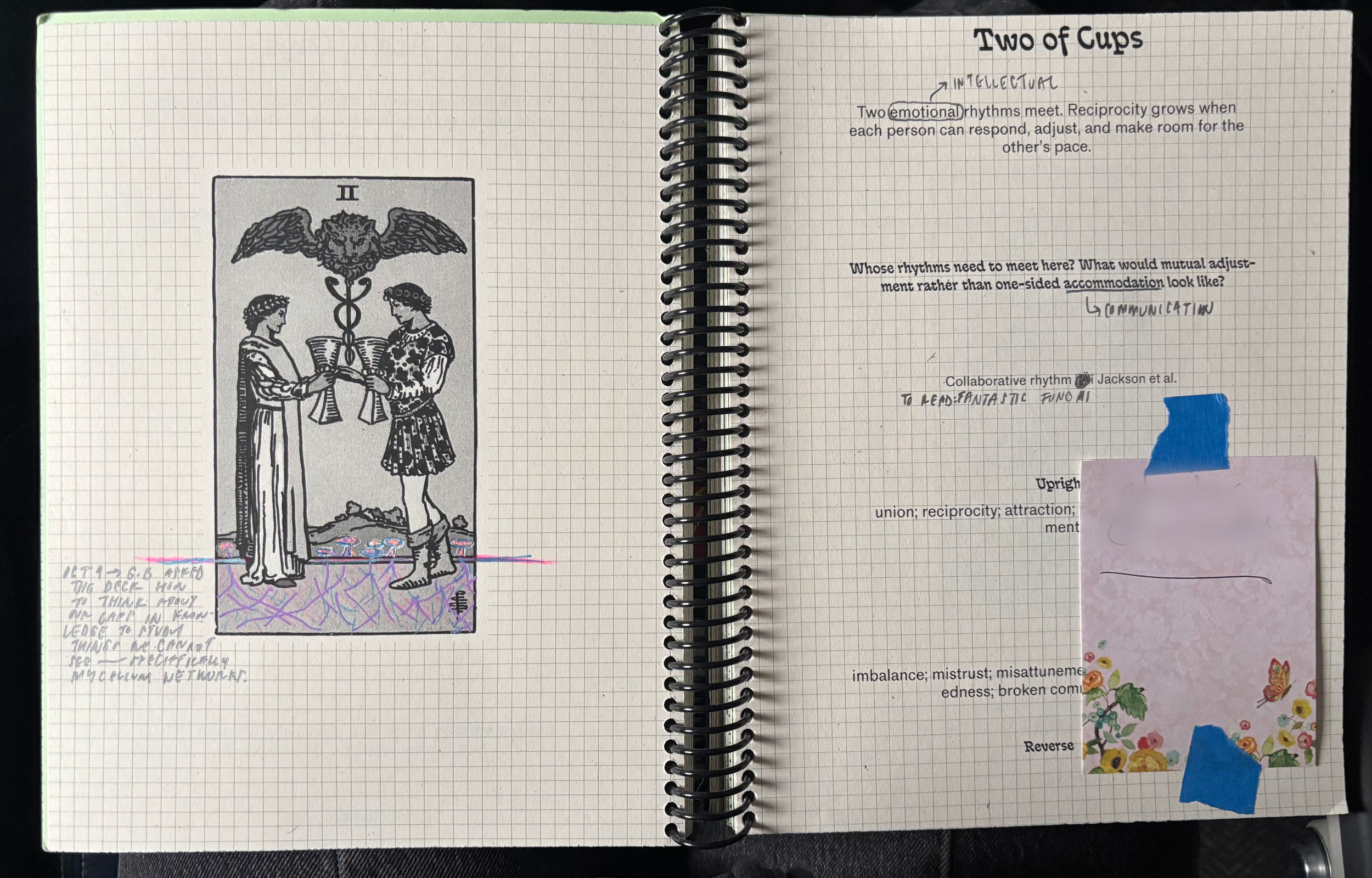
The experience also helped me figure out how to use the companion workbook in practice. I learned more about what I wanted to document during readings, how to capture ideas that emerged through conversation, and what might need to change in the workbook's design. I've already started making edits based on these experiences.
I also received invitations to bring the deck into other settings, which opens up opportunities to continue experimenting with how it might be used. :)
October 2026 –– Provisional Deck and Workbook
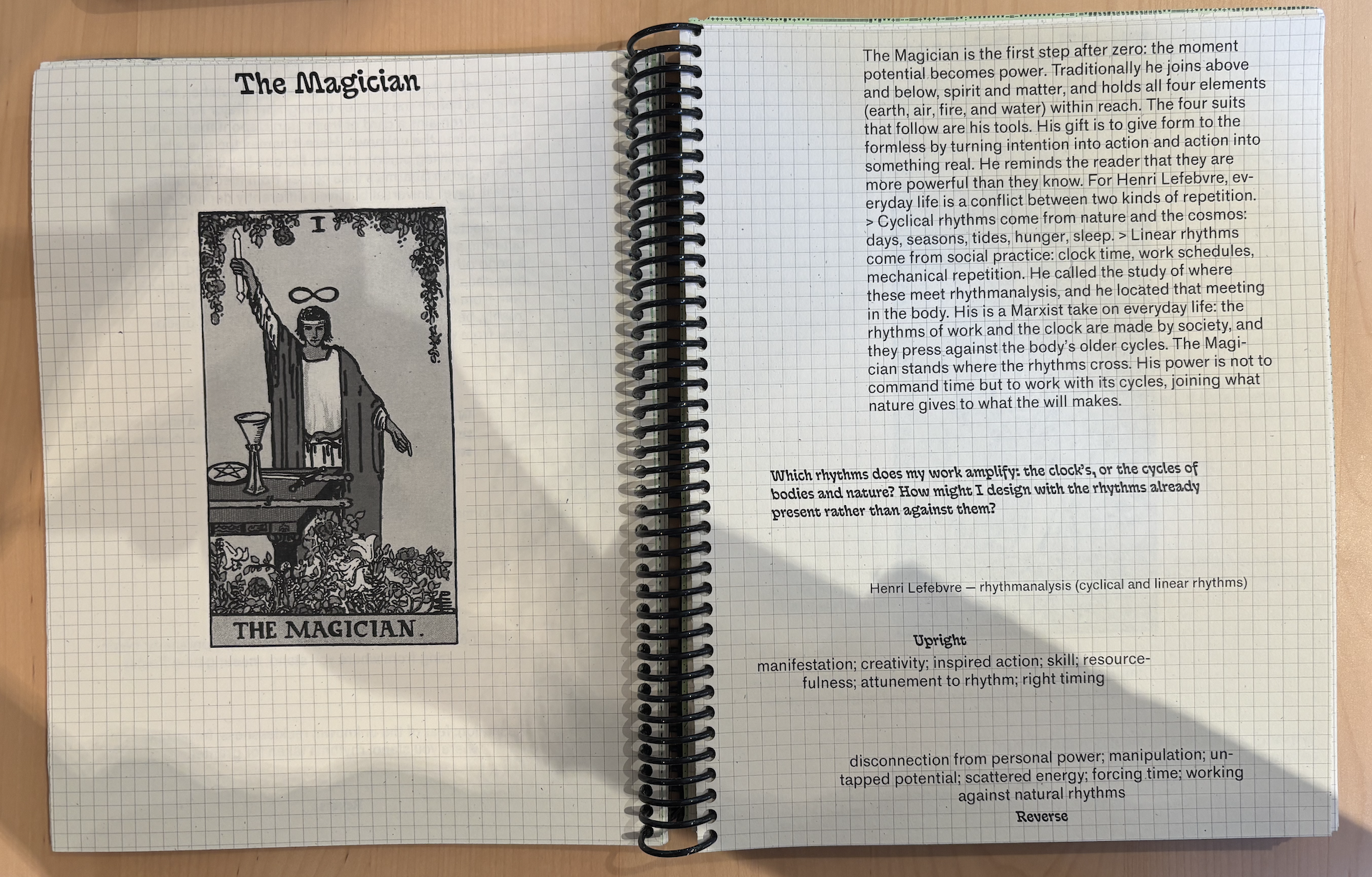
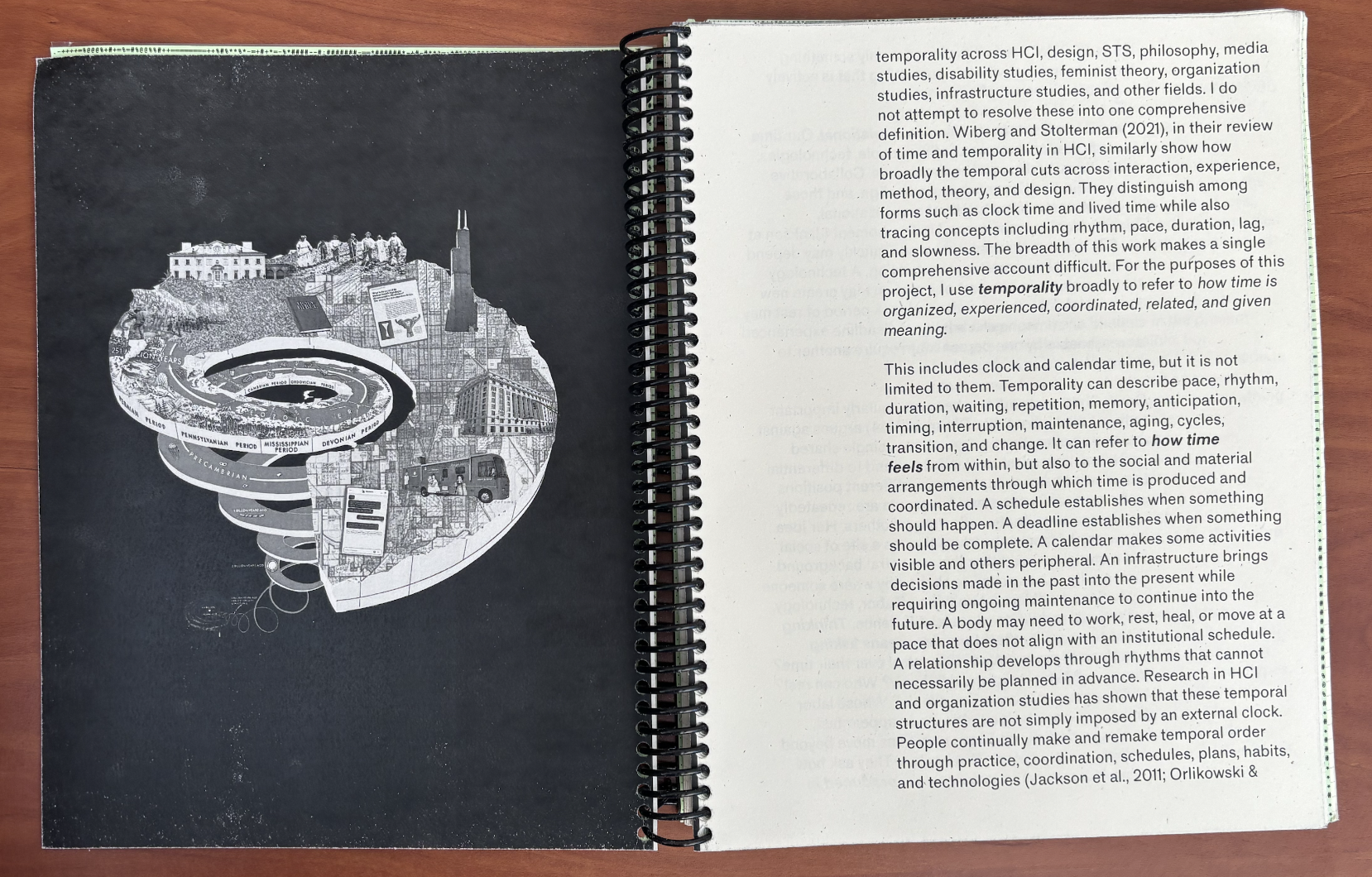
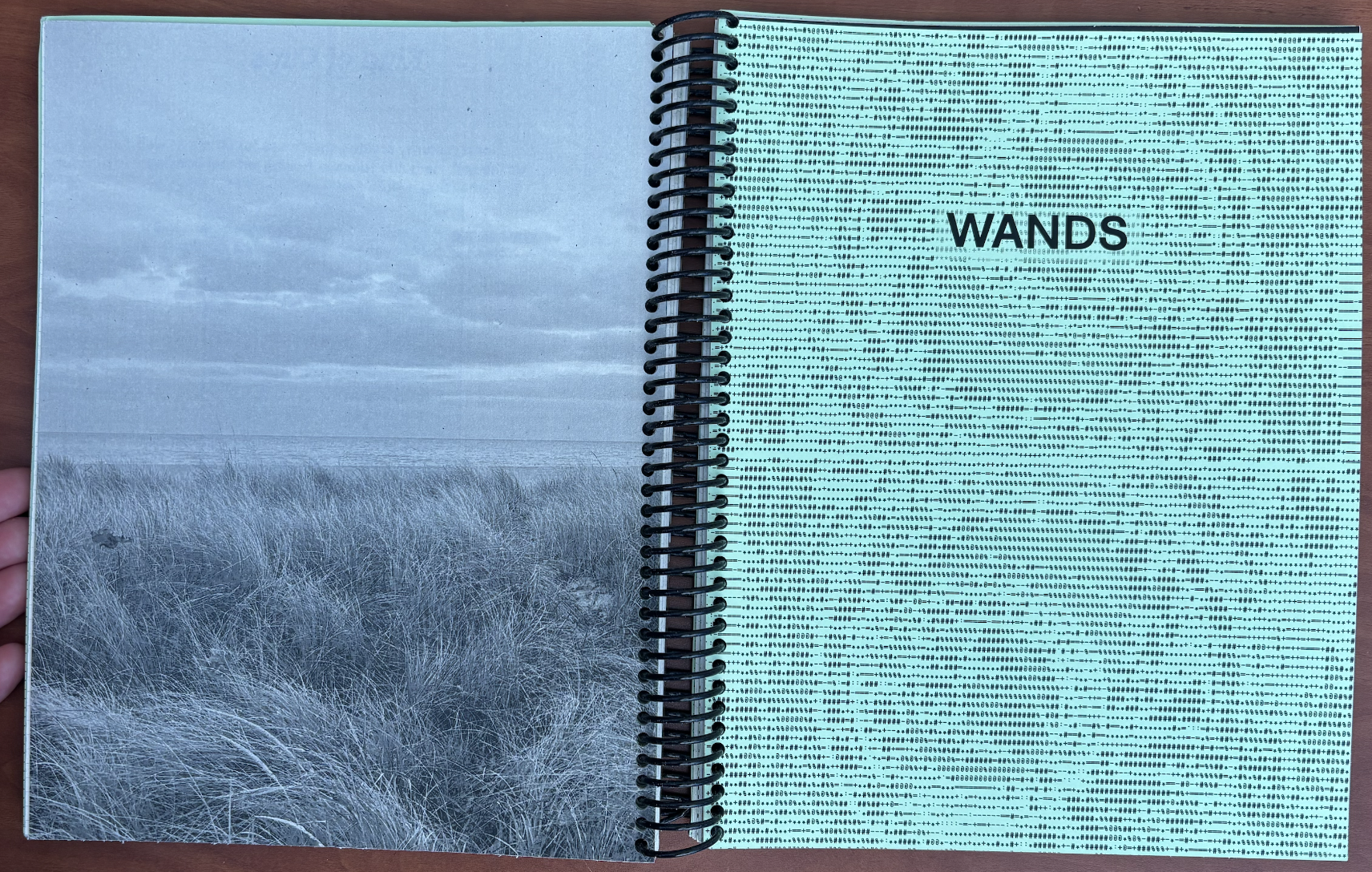
Throughout the summer, I iteratively prototyped the deck, initially working toward producing a final version. However, I eventually decided to slow this process down, embracing the temporality of the project itself. I had really enjoyed working through a tarot workbook lent to me by a friend. There was something about the heft of the book, the detailed accounts of each card, and the process of reading and rereading that felt important. I became interested in creating something that invited that same kind of sustained engagement.
I started developing my own workbook, drawing on the structure of traditional tarot guidebooks while bringing in the theories of temporality I had been mapping. Each entry became an opportunity to revisit the literature, reconsider connections, and explore how traditional card meanings and theoretical concepts might inform one another.
I decided to approach the project more explicitly as Research through Design, where making and revising are themselves forms of inquiry. For now, the workbook is the artifact I'm iteratively working through, rather than simply documentation of a finished deck. And over time, there will be a final, illustrated deck.
February & March 2026 –– Studying Tarot & Exploring Theory
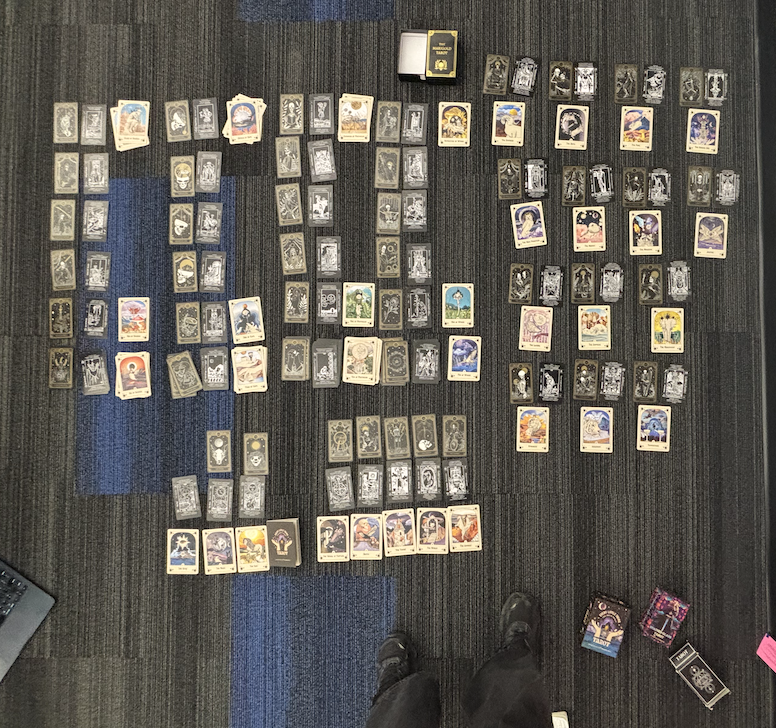
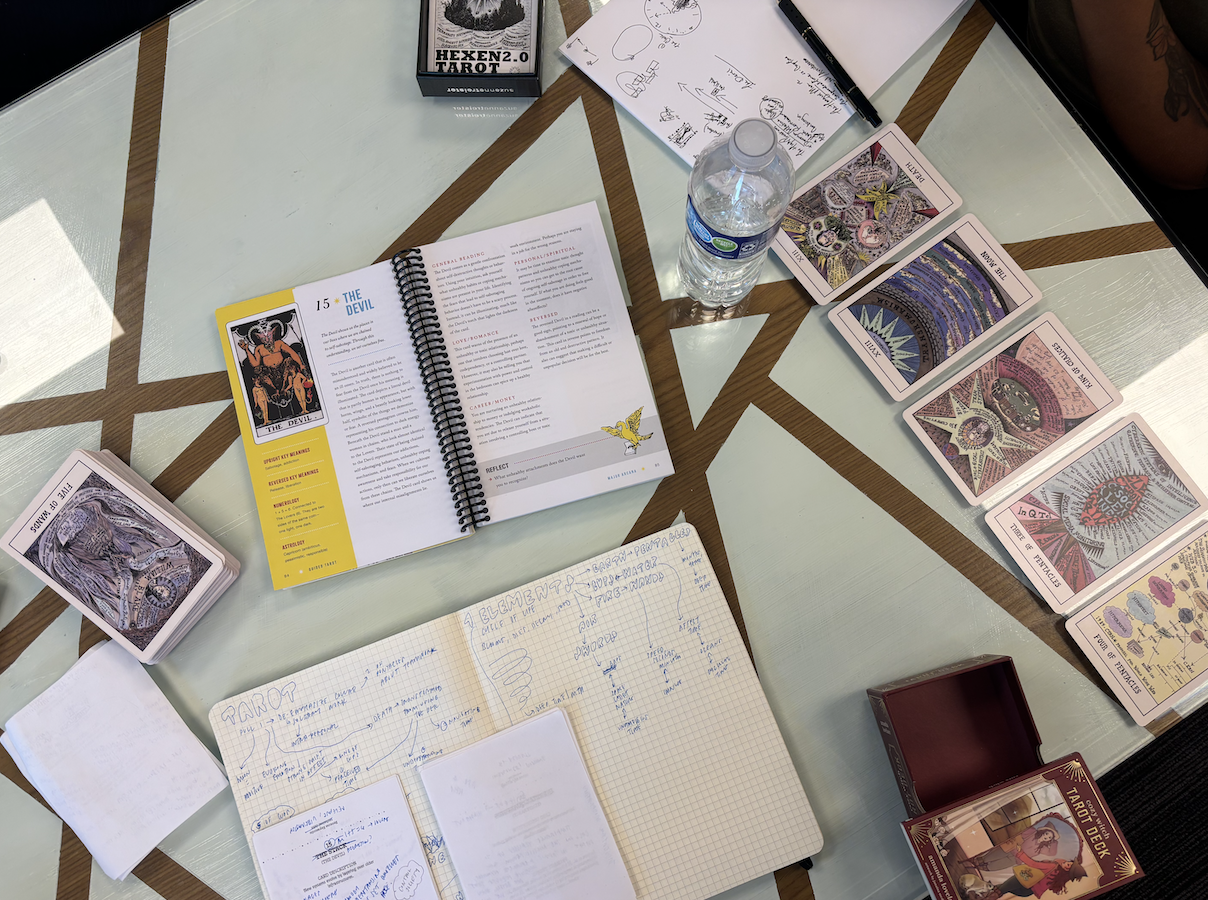
I started studying different tarot decks (lent to me by wonderful friends), looking at how they interpreted traditional card meanings through different visual languages, themes, and conceptual frameworks.
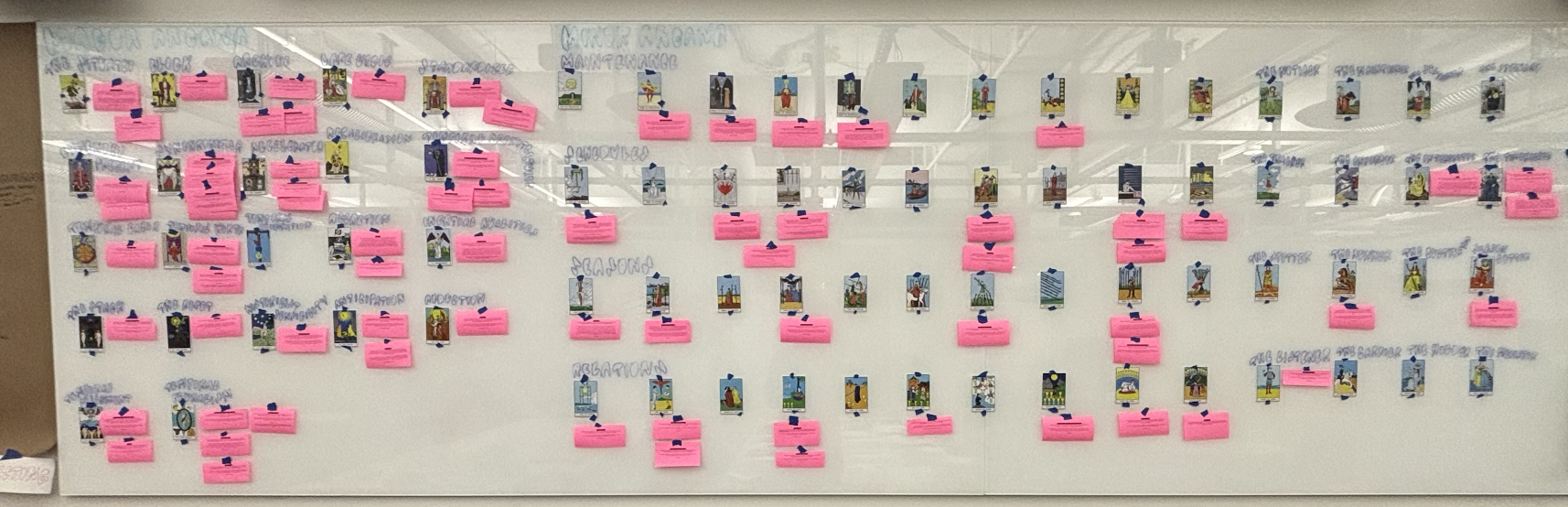
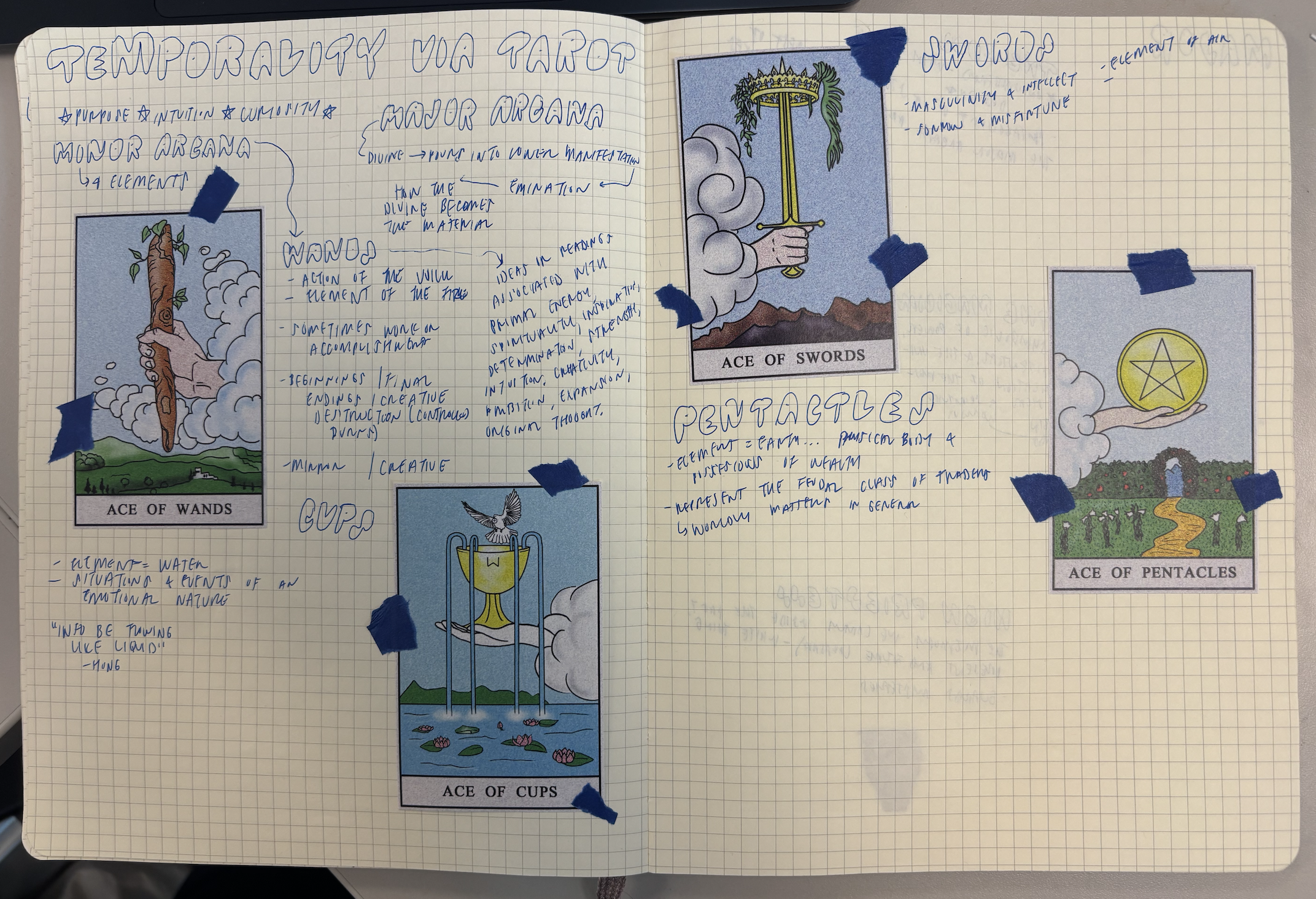
At the same time, I began mapping theories of temporality I was already familiar with onto the 78 cards. I was looking for connections between tarot's existing symbolism and ideas about rhythms, waiting, maintenance, anticipation, cycles, and other ways time is experienced and organized. Some connections felt intuitive, while others required more thought. I didn't want to force each theory into a card or lose the original tarot meanings in the process.
I iteratively worked through these mappings with my collaborators: Rachel Lowy and Jasmine Foriest. Alongside their interpretations, we revisited associations, questioning interpretations, and exploring different possibilities.
February 7, 2026 –– An Unexpected Starting Point
I had received an arts grant from Georgia Tech Arts for a proposed project titled Materializing Temporality: Creating Representations of Critical Theory, a project exploring how feminist, queer, crip, and STS theories of time could be translated into material and visual forms. I had ideas about cards, diagrams, and printed matter, but I was feeling stuck. I knew the theoretical territory I wanted to explore, but I wasn't sure what these objects should actually be.
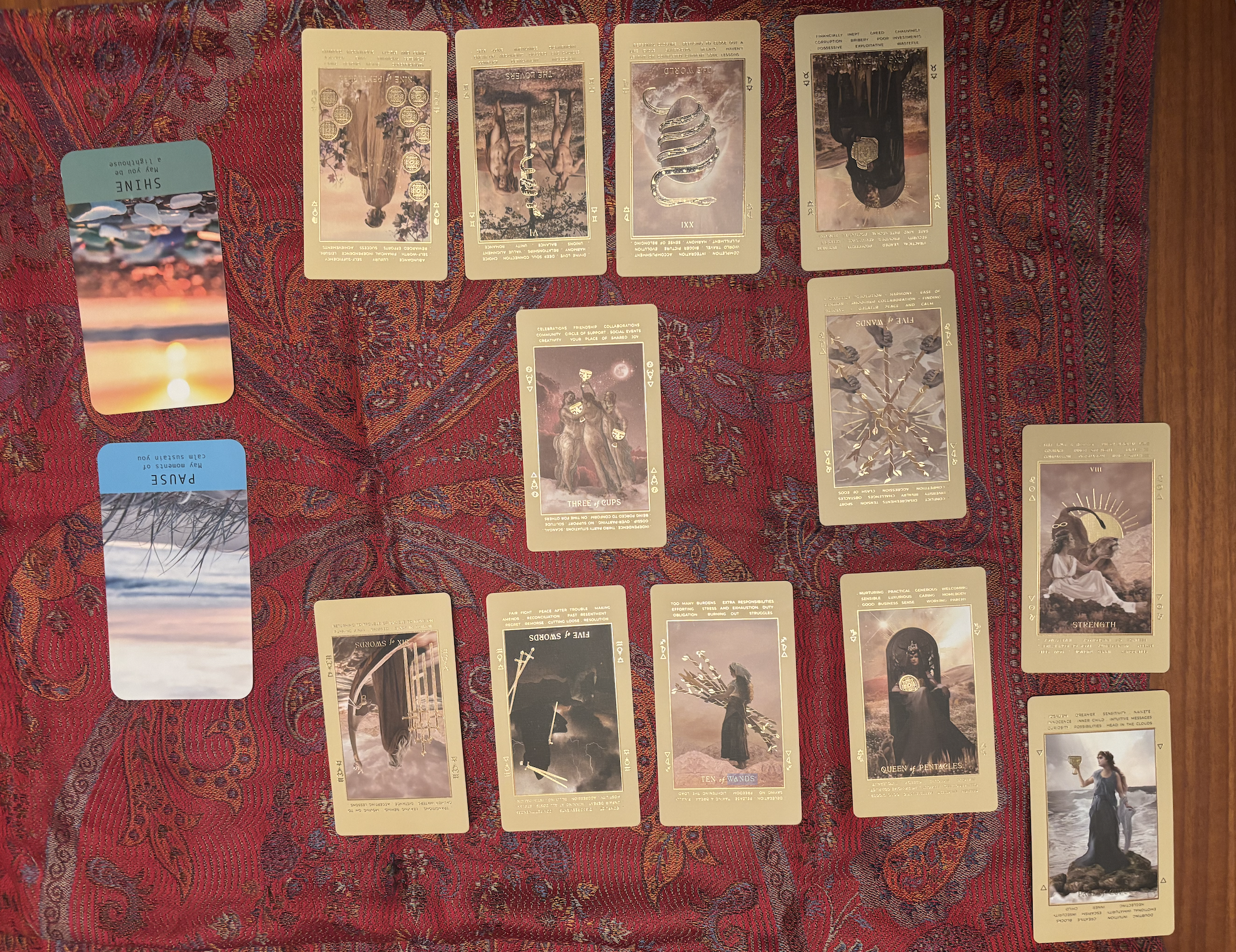
On February 7, a friend read my tarot. Something about the experience clicked. The cards were familiar objects, but their meanings emerged through handling, arranging, and interpreting them. There is no fixed outcome in tarot but the intention is to provide a gestalt switch. This type of material, emotional, and random interaction felt right to explore temporality theory. And with that, I took off to explore!